
More Than Service: The Reality of Restaurant Work in Grand Rapids
By Lily Chase
On a bustling night in Grand Rapids, Sophie Wagnon is moving quickly between tables, carrying plates and refilling drinks as conversations start to blend together. But then a customer leans in, making a remark about her appearance, something along the lines of how she “must get a lot of attention working here,” that hangs in the air longer than it should. Still smiling and holding her pen, Wagnon laughs it off, keeping the interaction light.
In a fast-paced restaurant where tips are essential, Sophie Wagnon has learned to distinguish between normal conversations and those that cross the line. A server in Grand Rapids for several years, she says dealing with frequent customer harassment is easier to brush off in the moment rather than make it into a bigger issue.
"It's not always something big," she says.
"Sometimes it's just the way people talk to you, or look at you, or how long they try to keep you there."
Her response is almost automatic. She laughs it off, keeps the conversation going, and avoids making things awkward. In a job where tips make up most of your pay, the difference between pushing back and going along can show up on the bottom of a receipt.
Wagnon's experience is a common one. Many restaurant workers in Grand Rapids navigate blurred boundaries and customer behavior that often goes unchecked. As the city’s dining scene grows, workers say these pressures shape how they approach each shift.
Sophie Wagnon's experience reflects a pattern in the restaurant industry, where workers must balance friendliness with boundaries that are not always respected. More than 70 percent of female restaurant workers report experiencing sexual harassment from customers, according to the Restaurant Opportunities Centers United, a national worker advocacy organization. The expectation that workers remain accommodating while relying on tips creates a dynamic where customers hold a high degree of control, something workers say shows up in everyday interactions.
Butcher’s Union via Instagram
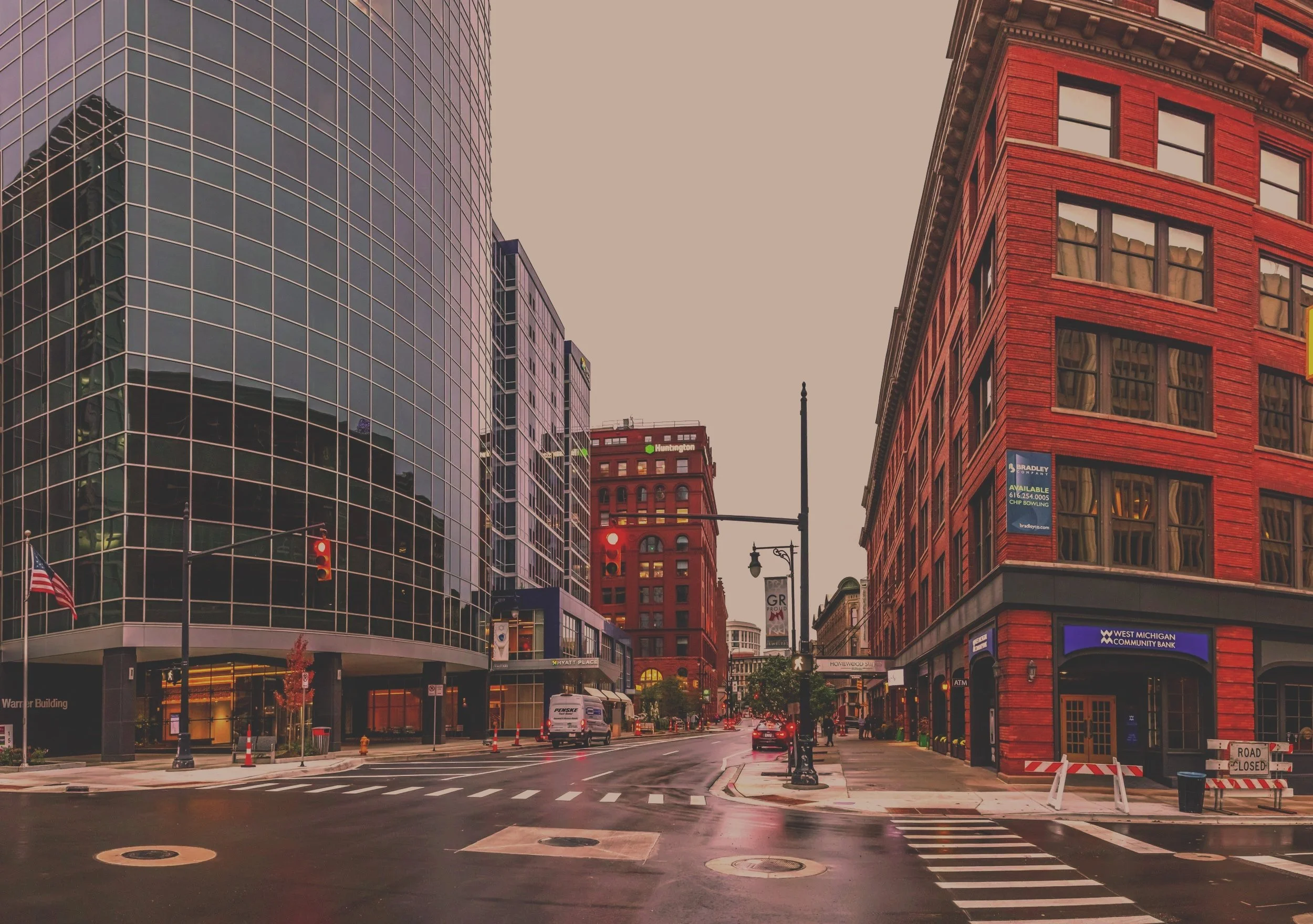
Roberto - stock.adobe.com
That dynamic ties directly to how workers are paid. In Michigan, tipped employees can earn as little as $3.93 per hour before tips, according to the Michigan Department of Labor and Economic Opportunity, with the expectation that gratuity will bring them up to minimum wage. For many restaurant workers, tips make up the majority of their income.
Haiden Edelberg, another restaurant worker in Grand Rapids, said those patterns show up in interactions. “It is almost expected at this point,” Edelberg said. “You know when a table is going to cross a line, and you prepare yourself for it before you even walk up.” Like Wagnon, Edelberg said the decision to respond is rarely simple. “You can shut it down, but then you risk your tip, or you can laugh it off and just get through the table,” she said. “Most of the time, you just get through it.”
Research supports that pattern. Studies from Restaurant Opportunities Centers United show that tipped workers experience higher rates of harassment than those in non-tipped roles, largely because of the power imbalance created by tipping. In Michigan, this issue has been formally recognized. A 2023 House resolution identified harassment of female restaurant workers as a significant concern and called attention to the lack of protections in tip-based work environments, though it does not directly change policy.
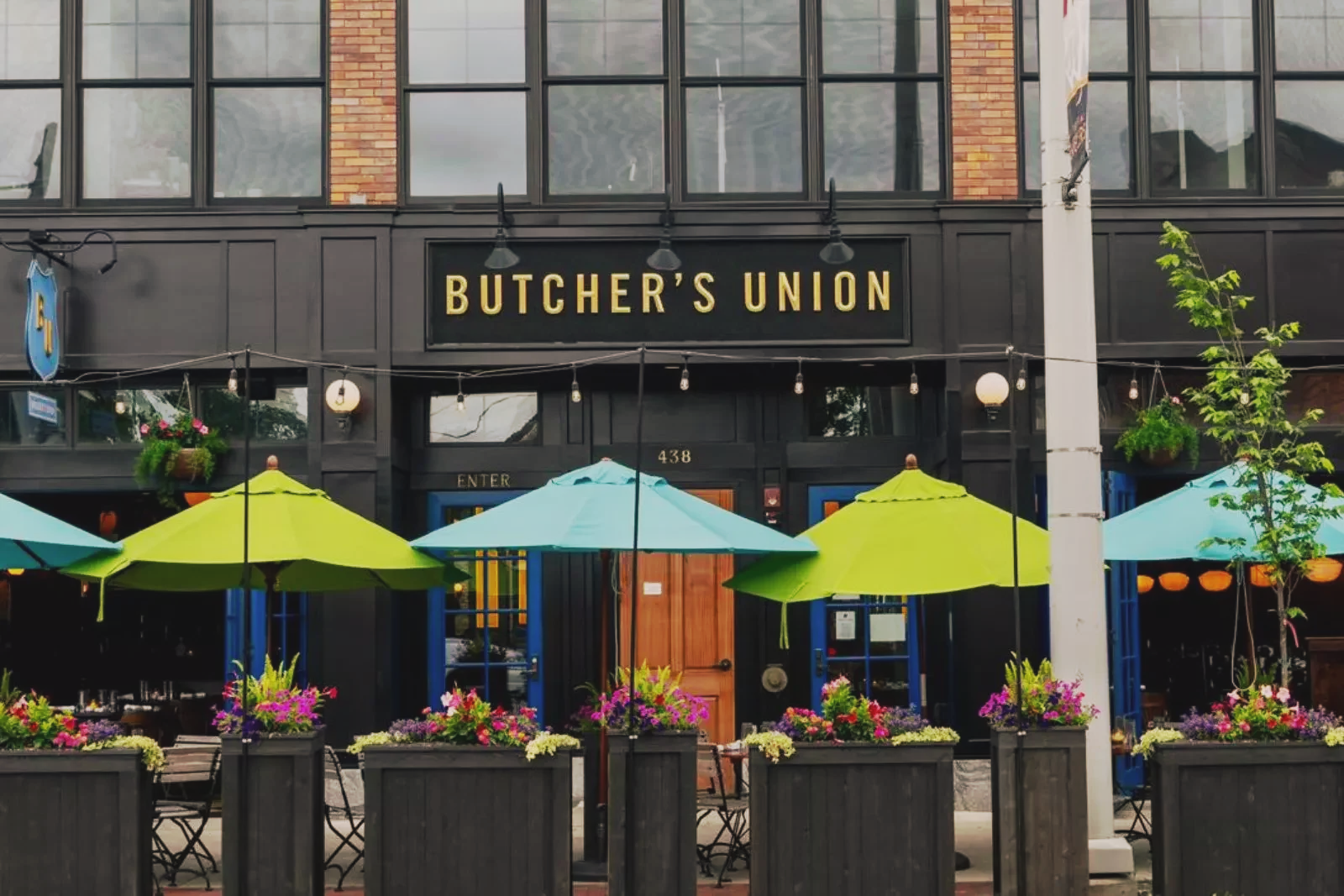
Butcher's Union via Facebook
In Grand Rapids, where the restaurant scene is central to the city’s social life, those realities often go unnoticed by customers. The job is not just about taking orders and delivering food. It requires reading people and adjusting behavior in real time, sometimes presenting a version of yourself that is easier for others to respond to. Sam Gibson, a server and bartender at Butcher’s Union, said alcohol often complicates those interactions later in the night.
“When people start drinking, they get more comfortable saying things they normally would not,” Gibson said. “A lot of the time, it is the servers who have to deal with that.”
“You can see it happening in real time,” he added. “It goes from normal to uncomfortable fast.”
Research from the National Institute on Alcohol Abuse and Alcoholism shows that alcohol lowers inhibitions and increases the likelihood of inappropriate social behavior, including comments that cross personal boundaries. As the night progresses and comments escalate, maintaining a professional demeanor becomes more difficult. Customers say things they normally would not, often crossing a line.
As a bartender, Gibson said part of his job involves noticing when that happens and stepping in if needed. He has seen how his female coworkers are treated and has intervened when situations start to feel uncomfortable.
Managing the situation is not always easy. Workers are not just serving; they are also performing. How they are perceived, including how they present themselves and respond to customers, can impact their earnings.
For Christian Docter, a gay server, that performance brings its own challenges. “I’ve had people make comments about my voice or ask personal questions that cross a line, thinking it’s a joke,” Docter said. “You are standing there trying to figure out how to respond without making it worse.”
Like others, Docter said responding directly can feel risky. “It is not about what you are comfortable with,” he said. “It is about what you can afford to react to.”
Some restaurants have begun putting systems in place to address these issues, even if they are not always visible to customers. At Gin Gin’s, a Grand Rapids restaurant, management has implemented policies to better protect employees. Ashley Heil, a manager at the restaurant, said those changes came from repeated experiences. “We have had situations where we realized we needed something in place,” Heil said. “It is not always one incident. It is a lot of smaller ones that add up.”
One of those policies ensures employees do not leave alone. “If someone does not feel comfortable, they do not walk alone,” Heil said. “We make sure there is someone with them, no questions asked.” The restaurant also tracks customer behavior. If an interaction makes an employee uncomfortable, it is documented so managers are aware if that customer returns. “It helps us stay ahead of it,” Heil said. “If someone has crossed a line before, we are not going to put that person back in that situation again.”
Policies like these are becoming more common as restaurants respond to workplace safety concerns, though enforcement often depends on management and workplace culture. Some workers say these systems help, while others note they still rely on individual judgment in the moment.
That balance does not just affect how workers handle interactions. Over time, it shapes how they approach the job as a whole. Several workers described a kind of adjustment that builds after repeated experiences. What feels uncomfortable at first becomes something they learn to anticipate, manage, and move past without reacting.
“You kind of stop being surprised by it,” Edelberg said. “It is not that it is okay; it is just that you know it is going to happen.” At the same time, the expectation to remain friendly does not change. In many cases, it becomes even more important. According to the U.S. Bureau of Labor Statistics, restaurant workers rely heavily on tips as a source of income, tying customer satisfaction directly to earnings.
“It is part of how you work,” Wagnon said. “You do not really think about it until you step back.”
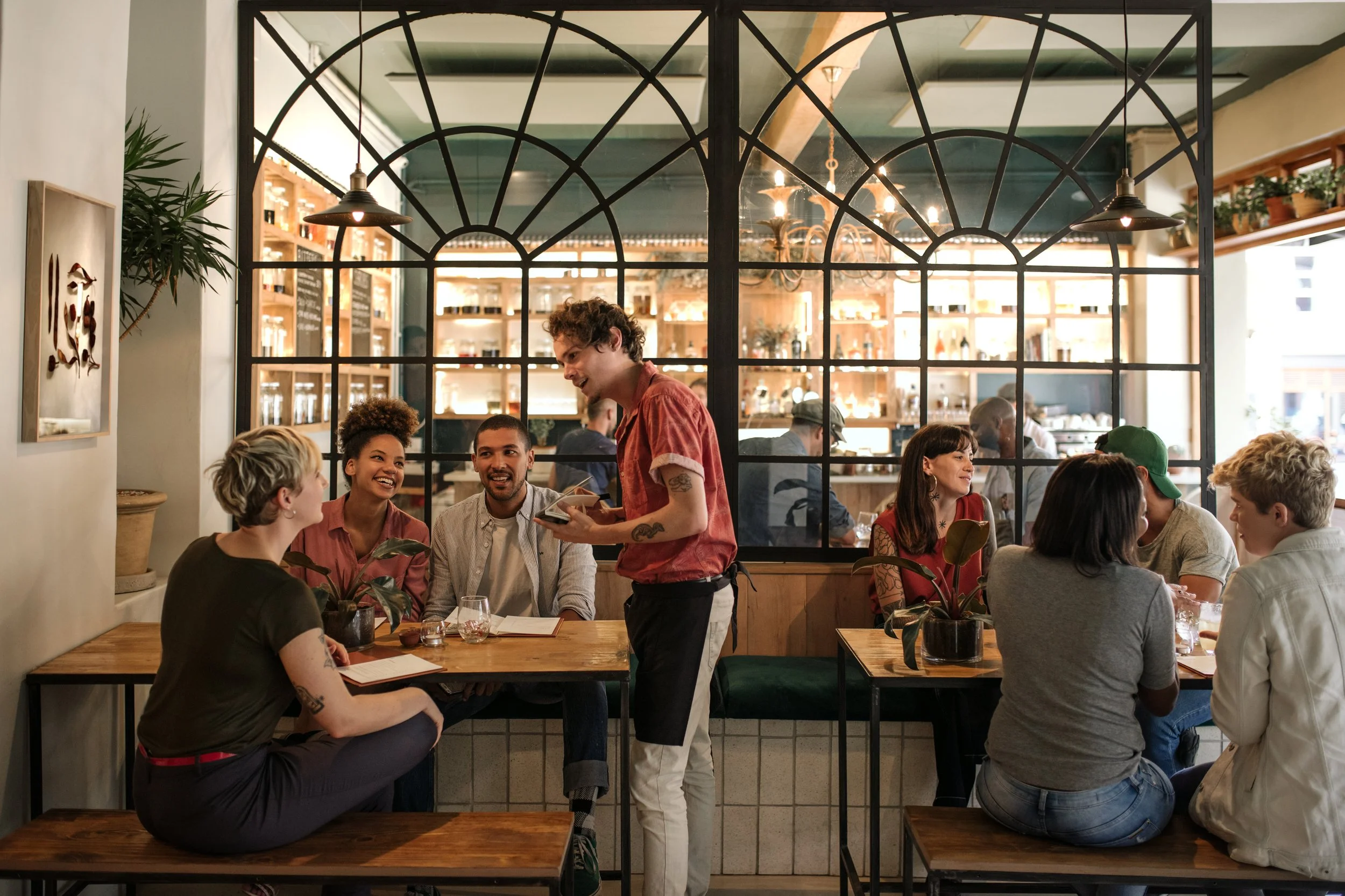
Experience Grand Rapids via Instagram
Rachel Cockroft, a regular at restaurants in Grand Rapids and a recent GVSU graduate, said she used to see those interactions as straightforward. “You just assume they are being nice because it is their job,” Cockroft said, adding that her perspective has started to change since learning more about what servers experience.
“You do not really think about what is going on behind that,” she said. “If someone is being overly friendly or laughing at something, you just take it at face value.” Now, she said she notices those interactions differently. “There is probably a lot more happening in those conversations than you realize,” Cockroft said. “You are only seeing one side of it.”
For workers like Wagnon, that disconnect is part of the job. The expectation to be friendly stays the same, even when the situation behind it is more complicated. Workers also describe instability beyond those interactions. Scheduling can change week to week, and income depends heavily on customer volume and tipping.
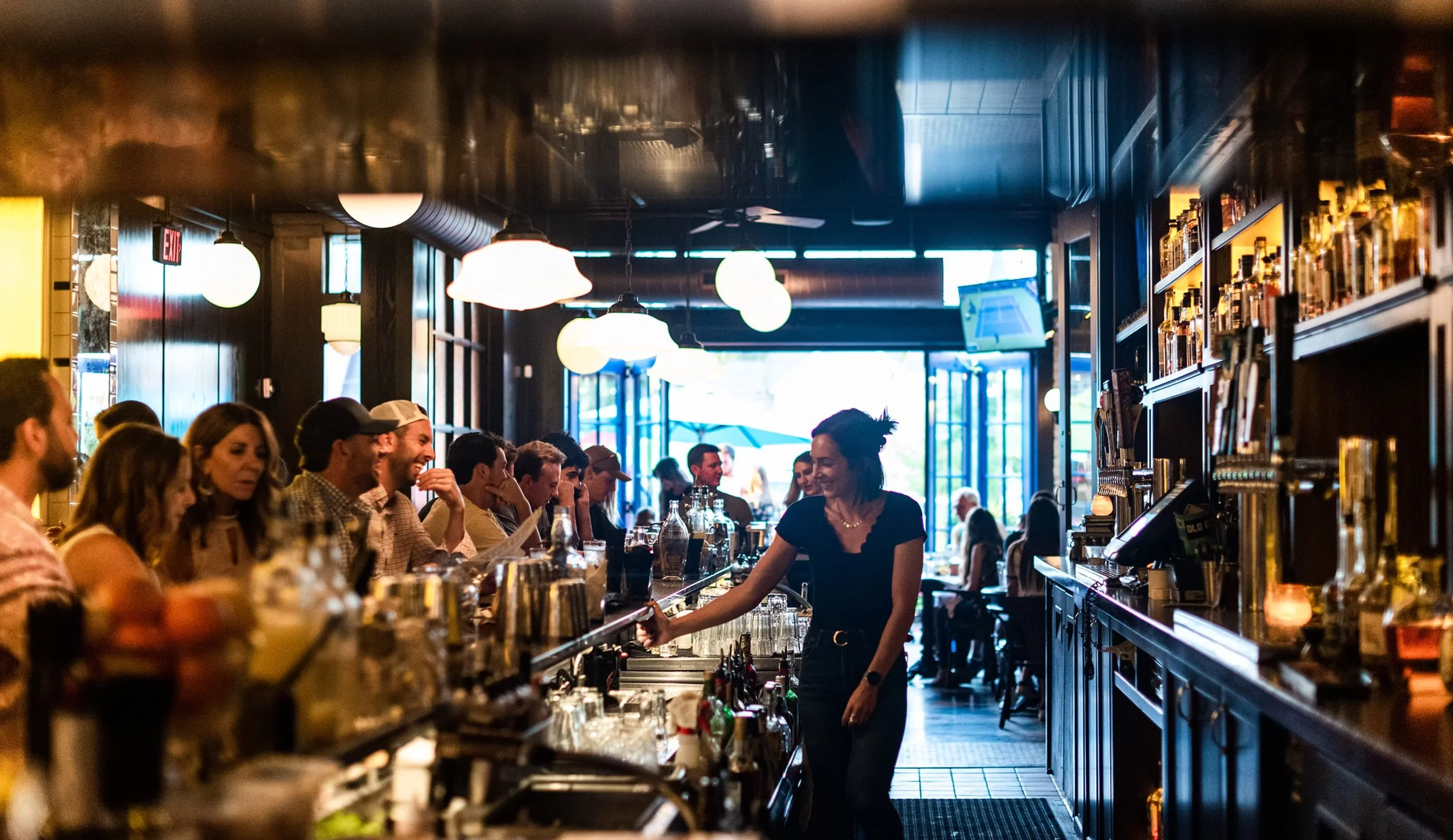
“It is not just one table,” Edelberg said. “It is your whole night. You are thinking about how everything adds up.” That uncertainty adds another layer to the decisions workers make. Moments that could be addressed are often managed instead, especially when income is tied to how the interaction plays out.
Even with policies in place, much of the responsibility still falls on individual workers to handle situations as they arise. For Wagnon, that means reading each table and adjusting in real time. By the end of the night, the conversations start to blur. Some are forgettable. Others linger.
Still, Wagnon moves through it the way she always has, balancing plates and maintaining her pace. “You just kind of figure it out as you go,” she said.
Most customers, like Cockroft once did, never notice that process. They see the service, easy conversation, and a smile that does not drop. What they do not see are the decisions behind it, the moments that get brushed off and carried into the next table.
By the time they leave, it is another night out. For the people working, it is something they will return to again tomorrow.